


Residential development in Mauritius sits at the intersection of several forces: land scarcity, rising quality-of-life expectations, evolving family and household structures, and a maturing construction industry increasingly capable of delivering more sophisticated projects. Terre d’été, a residential development associated with Apavou Group, offers a useful case study for understanding how these forces come together in practice.
The shift from functional housing to lifestyle-oriented development
For much of Mauritius’s post-independence economic history, residential development prioritised functional shelter provision, meeting a growing population’s basic housing needs efficiently. As the economy diversified and incomes rose, buyer expectations shifted. Homebuyers increasingly evaluate residential developments not just on unit size and price, but on landscaping, communal space, security, and the overall coherence of the surrounding environment.
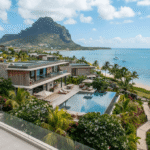
Terre d’été reflects this shift. Rather than being conceived as a purely transactional collection of housing units, the development integrates landscaped common areas and a degree of architectural coherence intended to support long-term livability rather than simply maximising the number of saleable units on a given plot of land.
Site selection and location logic
Location decisions in residential development are rarely simple. Developers must weigh proximity to employment centres, schools, and amenities against land cost and availability, while also considering longer-term factors like planned infrastructure investment and the trajectory of surrounding land use. A residential development positioned well ahead of an area’s full maturation can capture significant value appreciation as amenities and infrastructure catch up, but this requires patience and a willingness to accept lower initial absorption rates in exchange for long-term value capture.
This is a central tension in Mauritian residential development, given the island’s land constraints: prime, already-mature locations command a premium that can compress development margins, while emerging locations carry appreciation potential but also higher uncertainty around the pace and nature of surrounding development.
Density and unit mix considerations
One of the more technical aspects of residential development is determining the appropriate density and unit mix for a given site and target market. Too low a density underutilises valuable, scarce land; too high a density can undermine the very lifestyle qualities, privacy, green space, and quiet that differentiate a development in a competitive market.
Developments like Terre d’été typically navigate this by segmenting unit types, a mix of standalone homes, duplexes, or apartments of varying sizes, to appeal to a broader range of buyers while maintaining an overall density that preserves the intended lifestyle positioning. This requires careful phasing, since building out the entire unit mix at once exposes the developer to broader market risk if demand patterns shift across the development timeline.
Financing and phasing residential developments
Residential developments of any scale require careful financing structuring, typically blending developer equity, construction financing, and, in many markets, pre-sales that provide both capital and demand validation before construction is complete. Phased delivery allows developers to calibrate later phases based on the market response to earlier ones, reducing the risk of overbuilding relative to actual absorption.
This phasing discipline is particularly important in a market as compact as Mauritius, where a single large residential development can represent a meaningful share of the total available supply in its specific submarket and price segment. Overbuilding relative to genuine demand can suppress prices not just for the development itself, but for the broader surrounding market.
Amenities and community design
Beyond individual units, the design of shared amenities, parks, recreational facilities, and security infrastructure plays an increasingly central role in differentiating residential developments in a competitive Mauritian market. These amenities represent a genuine trade-off: land and capital devoted to shared spaces reduces the total number of saleable units, but can meaningfully increase the achievable price per unit and improve long-term retention and resale value across the development.
Developments that under-invest in these shared elements often struggle with long-term desirability, even if initial sales are strong, because the lived experience of residents, rather than the marketing brochure, ultimately determines a development’s long-term reputation and resale performance.
Long-term value and the patrimonial approach
Perhaps the most distinctive feature of a development like Terre d’été, when compared to more purely transactional residential projects, is the emphasis on long-term value preservation over initial sales velocity. This “patrimonial” approach, building assets intended to hold and appreciate value across decades rather than simply generating an initial sales profit, reflects a broader philosophy common among longer-established Mauritian development groups.
This approach has direct implications for design choices: material quality, landscaping maintenance provisions, and architectural choices that age well rather than following short-lived stylistic trends. It also has implications for how the development is managed after completion, since ongoing maintenance and community management significantly affect whether the initial value proposition is preserved over time.
Pricing strategy across a multi-phase residential rollout
Pricing a residential development that unfolds over several years and multiple phases involves more than setting a single price list at launch. As earlier phases sell and the surrounding development matures, landscaping fills in, community amenities become operational, and the development’s reputation in the market becomes established, later phases can typically command higher prices than would have been achievable at initial launch, reflecting the reduced uncertainty and improved lived experience that comes with a more mature development.
This pricing progression needs to be managed carefully, however. Pricing later phases too aggressively, based purely on the assumption of continued appreciation, risks slowing absorption if the broader market softens or if buyer expectations don’t rise as quickly as anticipated. Developers with experience across multiple residential projects tend to build in more conservative, milestone-based pricing escalations, tied to observable indicators like actual sales absorption rates and completed amenity delivery, rather than purely time-based or speculative pricing increases.
What this case study offers other developers
For developers considering residential projects in Mauritius or comparable island markets, several lessons emerge from studying developments like Terre d’été:
- Location decisions should account for the full maturation trajectory of an area, not just its current state.
- Density and unit mix require careful calibration to balance land efficiency against lifestyle positioning.
- Phased delivery reduces market risk relative to building out an entire development at once.
- Investment in shared amenities pays off in long-term retention and resale value, even though it reduces immediately saleable area.
- A patrimonial mindset, building for decades, not just for initial sale, shapes design and management decisions in ways that purely transactional development does not.
Managing environmental and climate resilience in residential design
Residential developments in Mauritius must account for cyclone exposure, heavy seasonal rainfall, and, in some locations, proximity to coastal flood risk. Building to a standard that exceeds minimum code requirements, reinforced roofing systems, adequate drainage infrastructure, and careful siting relative to flood-prone areas add to upfront construction costs but substantially reduce the likelihood of costly damage and disruption over the life of the development. For a residential community intended to last decades, this upfront investment in resilience is generally a more economical choice than the alternative of recurring storm damage and the associated repair costs, insurance premium increases, and disruption to residents’ lives.
The sales and marketing approach for a patrimonial development
Marketing a residential development positioned around long-term value, rather than short-term investment flipping, requires a different approach than more transactional residential sales campaigns. Buyers attracted to a patrimonial development tend to weigh factors like community quality, architectural coherence, and long-term neighbourhood trajectory more heavily than headline price per square foot. This means marketing efforts benefit from emphasising lived experience, the quality of shared spaces, and the character of the community being built, rather than purely emphasising investment return potential, which tends to attract a different, more transaction-oriented buyer profile that may be less aligned with the development’s long-term community objectives.
Post-completion evolution of the development
A development’s story doesn’t end at completion. As residents move in and the community matures, informal social dynamics, usage patterns of shared spaces, and evolving resident needs often reveal opportunities for incremental improvement, additional amenities, adjusted landscaping, or infrastructure upgrades that weren’t part of the original plan but that meaningfully improve the development’s long-term quality of life. Developers who remain engaged with a project well beyond its initial sales phase, rather than considering their involvement complete once units are sold, are better positioned to make these improvements in a way that reinforces the original community-oriented vision.
Learning from resident feedback across development phases
A genuinely disciplined approach to residential development treats each completed phase as a source of learning for subsequent phases. Structured feedback from early residents, through informal conversation, satisfaction surveys, or observation of how shared spaces are actually used once occupied, often surfaces practical insights that weren’t apparent during the design process: which amenities see genuine daily use versus which remain underused, which aspects of the internal circulation work well versus which create friction, and which maintenance issues emerge as the development ages beyond its initial completion.
Incorporating this feedback into later phases, rather than treating the original master plan as fixed and unchangeable, allows a multi-phase development like Terre d’été to improve incrementally over its build-out period, so that later phases benefit directly from the lived experience of earlier residents rather than simply replicating the same design regardless of how well it has actually performed in practice.
Coordinating with utility and municipal infrastructure providers
Large residential developments depend heavily on coordination with external infrastructure providers, water, electricity, road access, and telecommunications, whose own project timelines don’t always align neatly with a developer’s construction schedule. Delays in utility connections or municipal road upgrades can hold up a project’s ability to hand over completed units, even when the residential construction itself is finished on schedule. Developers with an established track record and ongoing relationships with these infrastructure providers are generally better positioned to anticipate and manage these dependencies than those encountering them for the first time, reducing the risk of costly handover delays that can damage buyer confidence even when the underlying residential product itself is sound.
A reference point for future residential projects
As Mauritius’s residential market continues to mature and buyer expectations continue to rise, developments like Terre d’été will likely serve as reference points against which future projects are measured, both by prospective buyers deciding where to invest and by other developers calibrating their own approach to site selection, density, phasing, and long-term stewardship. The specific design choices made in any single development will inevitably evolve with changing tastes and technology, but the underlying discipline of prioritising durable, long-term livability over short-term sales maximisation is likely to remain the defining characteristic that separates genuinely successful residential developments from merely profitable ones.
Conclusion
Terre d’été offers a case study in what disciplined, long-horizon residential development looks like within the specific constraints of the Mauritian market. Site selection, density calibration, phasing, financing structure, environmental resilience, and a genuine commitment to shared amenities and long-term value preservation together define an approach that prioritises durable value creation over short-term sales maximisation, a distinction that becomes increasingly important as Mauritius’s residential market continues to mature and buyer expectations continue to rise in step with it.
 Previous Post